Opinion piece by Jason Sim, Managing Director, Playpoint
Designing a playground is far from straightforward. What appears to be a simple collection of slides, swings and climbing structures is shaped by many interconnected considerations—from play value, safety and inclusion to design aesthetics, material choices, space, budget, climate and maintenance, to name just a few. Bringing them together in a way that still feels fun, vibrant and intuitive is no small feat.
It is encouraging to see these considerations reflected in HDB’s Play Values Framework, which emphasises physical, social and creative play across different age groups while recognising practical realities such as safety, age-appropriateness and space. These principles have shaped our approach to playground design for many years, and their formalisation sets a higher benchmark for play in Singapore and, we hope, beyond.
Drawing from our own experience, we believe there are further qualities that can turn a functional playground into a truly memorable one. There may be no perfect playground, but these eight principles continue to guide how we approach the challenge.
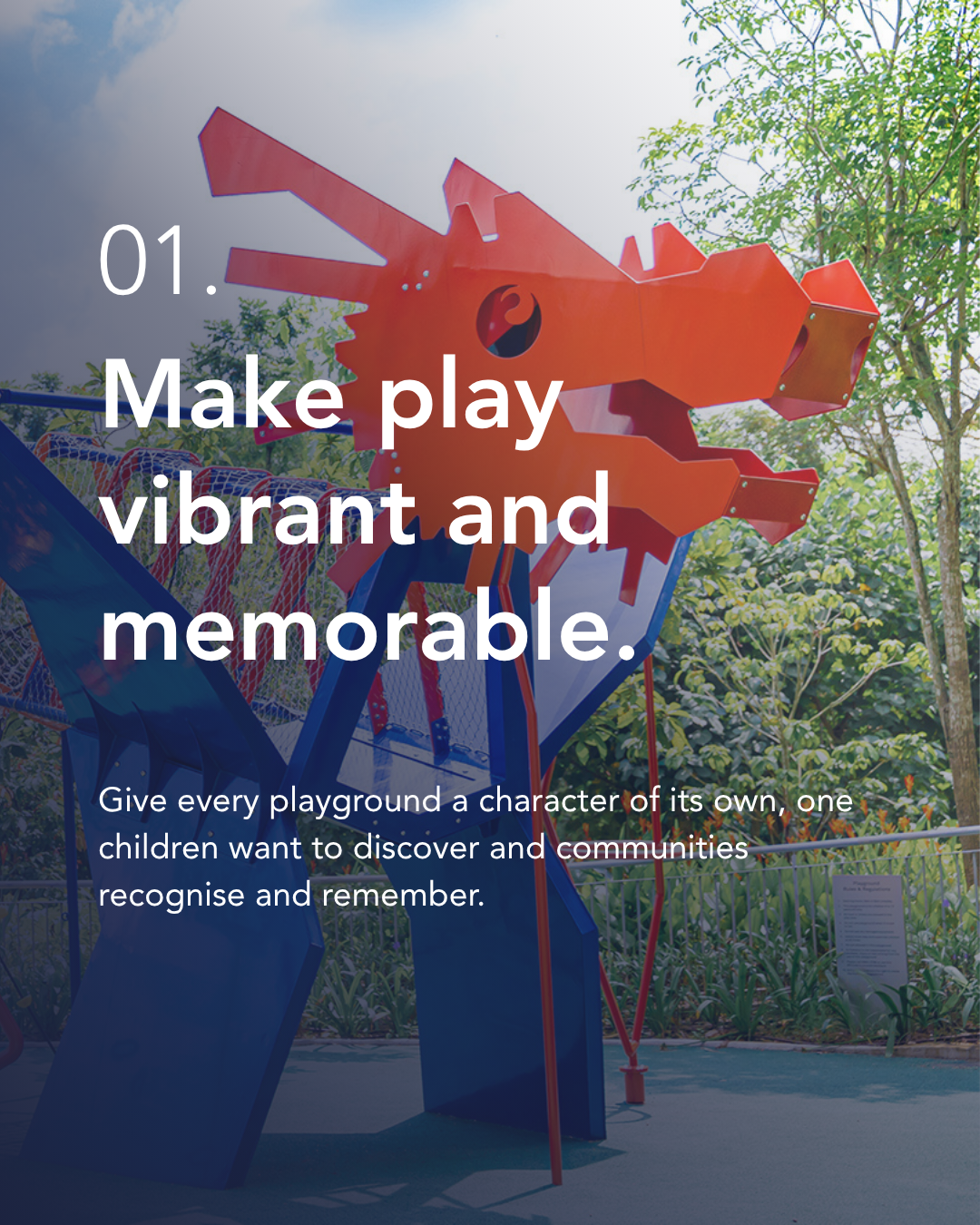
1. Make play vibrant and memorable
A playground should have a character of its own. Its theme, colours, forms and play equipment can come together to create an experience that feels distinctive to its setting.
For our bespoke playgrounds, each environment is designed specifically for the project rather than reproduced elsewhere. This gives children a new world to discover—and the community a place it can recognise and remember.
At Play@Heights Park, the brief was to create somewhere people would seek out, not simply walk past. Singapore’s first rolling bridge playground, nautical-themed water play, ziplines and a striding track came together to make it a destination for the wider town.
2. Go beyond convention
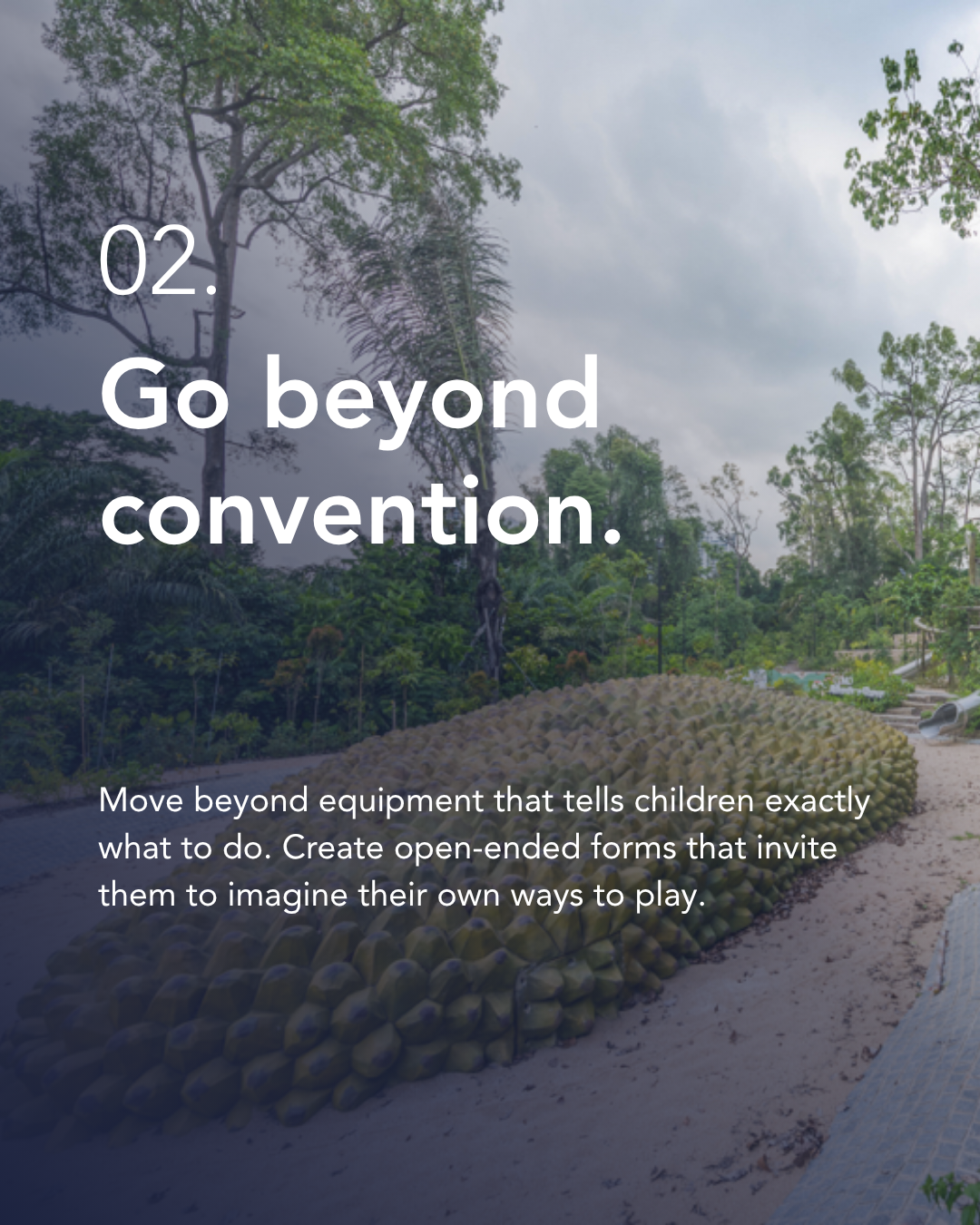
Conventional play equipment often suggests a particular action: sit here, hold this or slide down.
Play sculptures leave more room for interpretation. A child might see the same structure as a hideout, a creature, an obstacle course or the starting point for an entirely new game. There is no single “correct” way to use it and that is precisely the point.
At Como Adventure Grove, recognisable forms inspired by the Singapore Botanic Gardens including a towering banyan tree and an oversized jackfruit invite children to climb, explore and invent their own ways to play.
3. Integrate play into the landscape
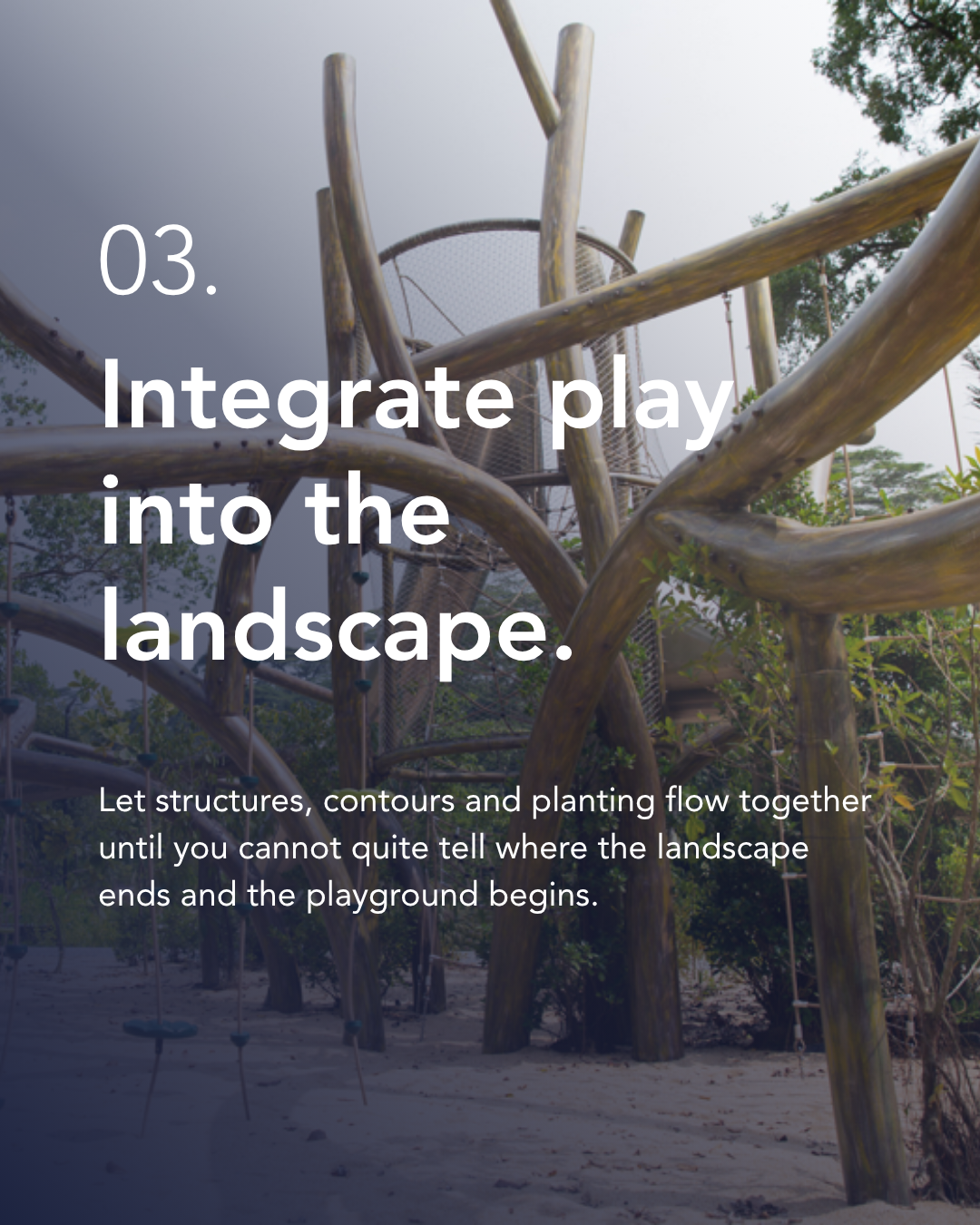
The best play spaces do not sit on the landscape – they grow out of it. Hardscape and softscape, contours and planting, seating and structure flow into one another until it is difficult to say where the garden ends and the playground begins.
Como Adventure Grove is the clearest expression of this for us. Set within the Singapore Botanic Gardens, it had to feel as though it belonged there. Greenery was planted throughout the play space for natural shade, surfaces were textured to echo the surrounding trees, and the play forms drew directly from distinctive tree features found in the Gardens.
Working alongside the landscape architects, we designed the playground and its setting as one continuous language, an extension of the garden rather than an object placed within it.
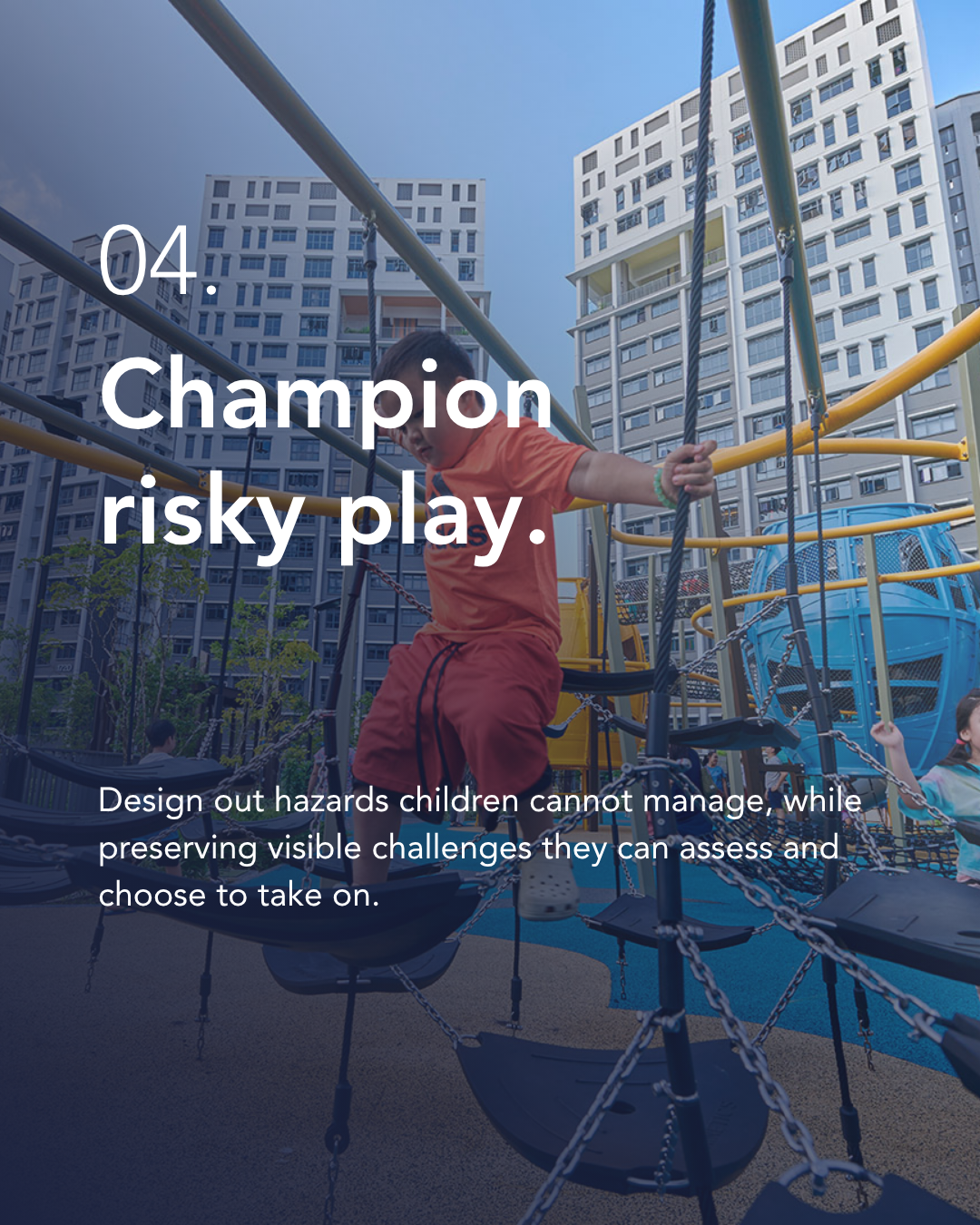
4. Champion risky play
Risky play does not mean unsafe play.
Hazards are dangers a child cannot see and cannot manage; we design those out entirely. Risk is a challenge a child can see, weigh and choose to take on such as the height of a climbing net, the wobble of a bridge or the speed of a slide.
That distinction is supported by a rigorous safety process. Third-party safety auditors are brought in during engineering, professional engineers verify the structure, and the finished playground is inspected against the Singapore Playground Safety Standard (SS 457).
We engineer out the hazards precisely so the risk can stay, because it is the risk that gives play its meaning.
5. Design for different bodies, ages and abilities
Real play is physical. It asks children to pull, hang, balance, climb and push their bodies in different ways. This is where development happens – in their muscles, coordination and spatial awareness.
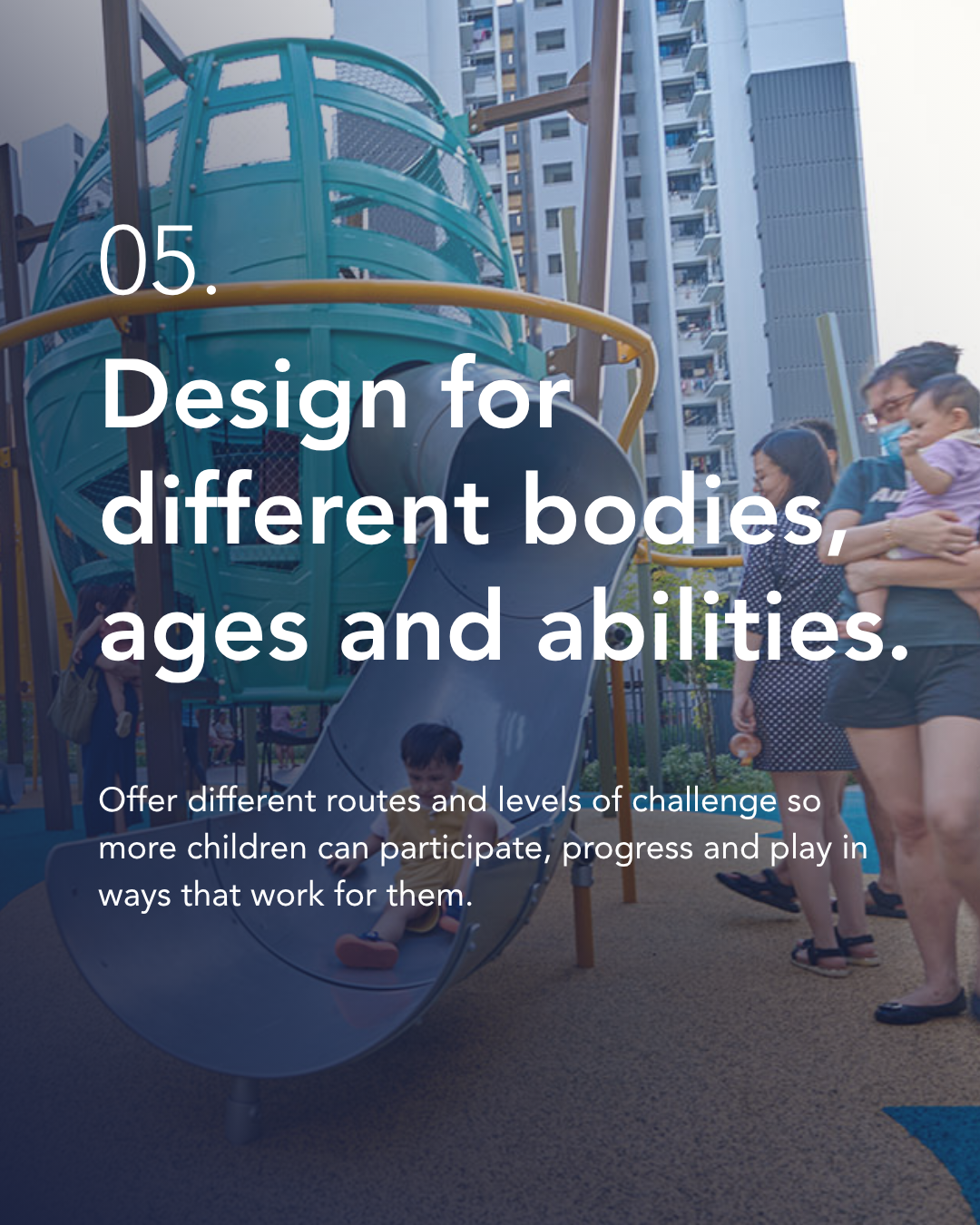
At Rivervale Shores in Sengkang, we leaned into this deliberately. We moved away from typical boxy structures in favour of organic, bird-inspired forms: outstretched “wings” to climb, a nest-like netted swing and a curved track ride that tests balance, coordination and spatial awareness. Every route through the space challenges the body in a slightly different way.
But physical play should not mean designing for only one type of child. Different heights, routes and levels of challenge allow children of different ages, abilities and confidence levels to participate at their own pace and progress over time. We also recognise that inclusive design must consider children with a wide range of physical, sensory and cognitive abilities. We still have much to learn from their experiences so we can design spaces where more children can participate meaningfully. This is only a starting point, and an ongoing process.
6. Create more “I did it” moments
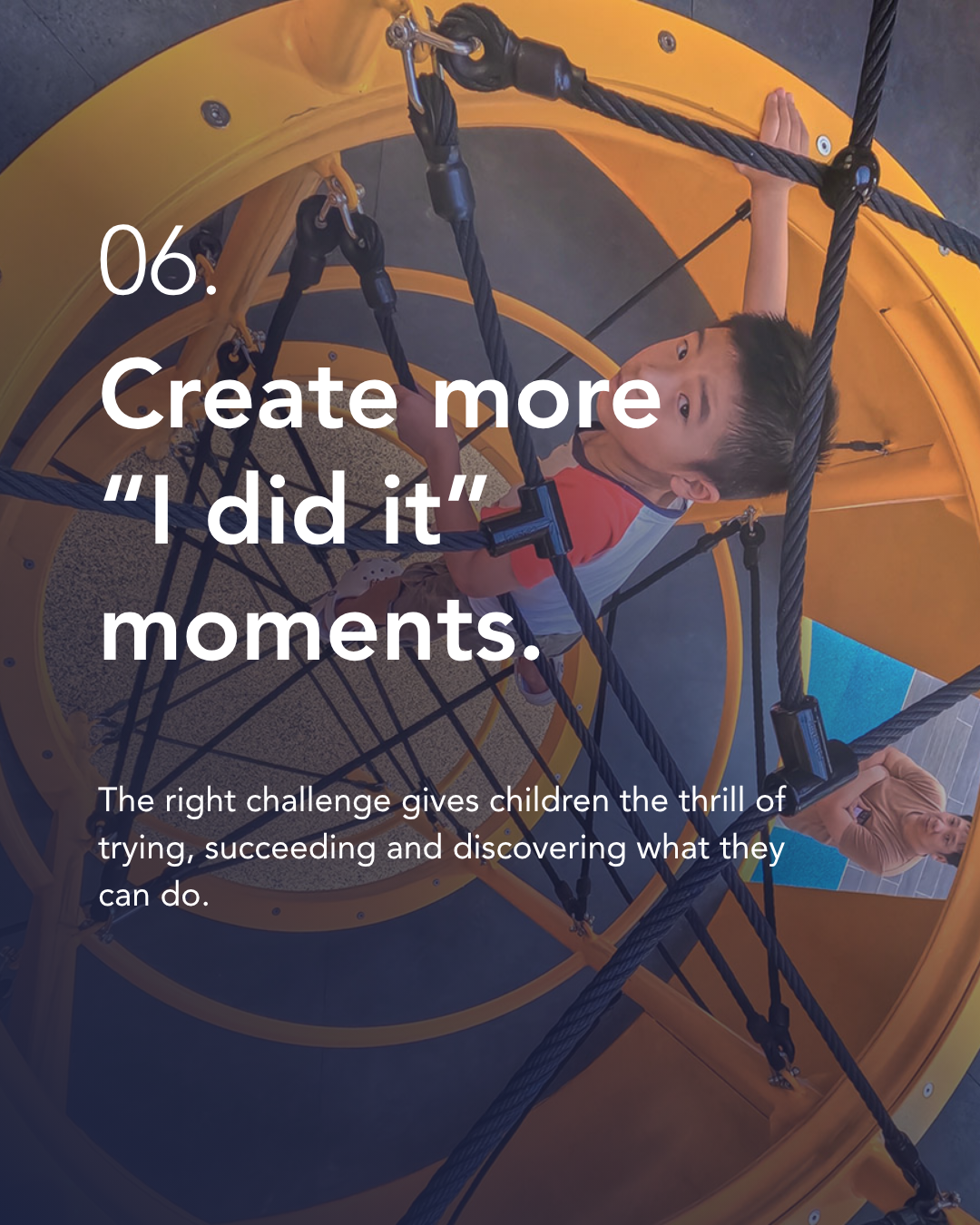
Think about the child at the top of a tall climb, heart pounding, who decides to go for it anyway and makes it. That moment of “I did it” is one of the most powerful experiences a child can have.
At Como Adventure Grove, we designed for exactly that feeling. Its tube slides descend from heights of 6m and 11m – heights we specifically pushed for so that emerging from the canopy and taking the plunge feels like a genuine thrill the child chooses for themselves.
7. Build in replayability
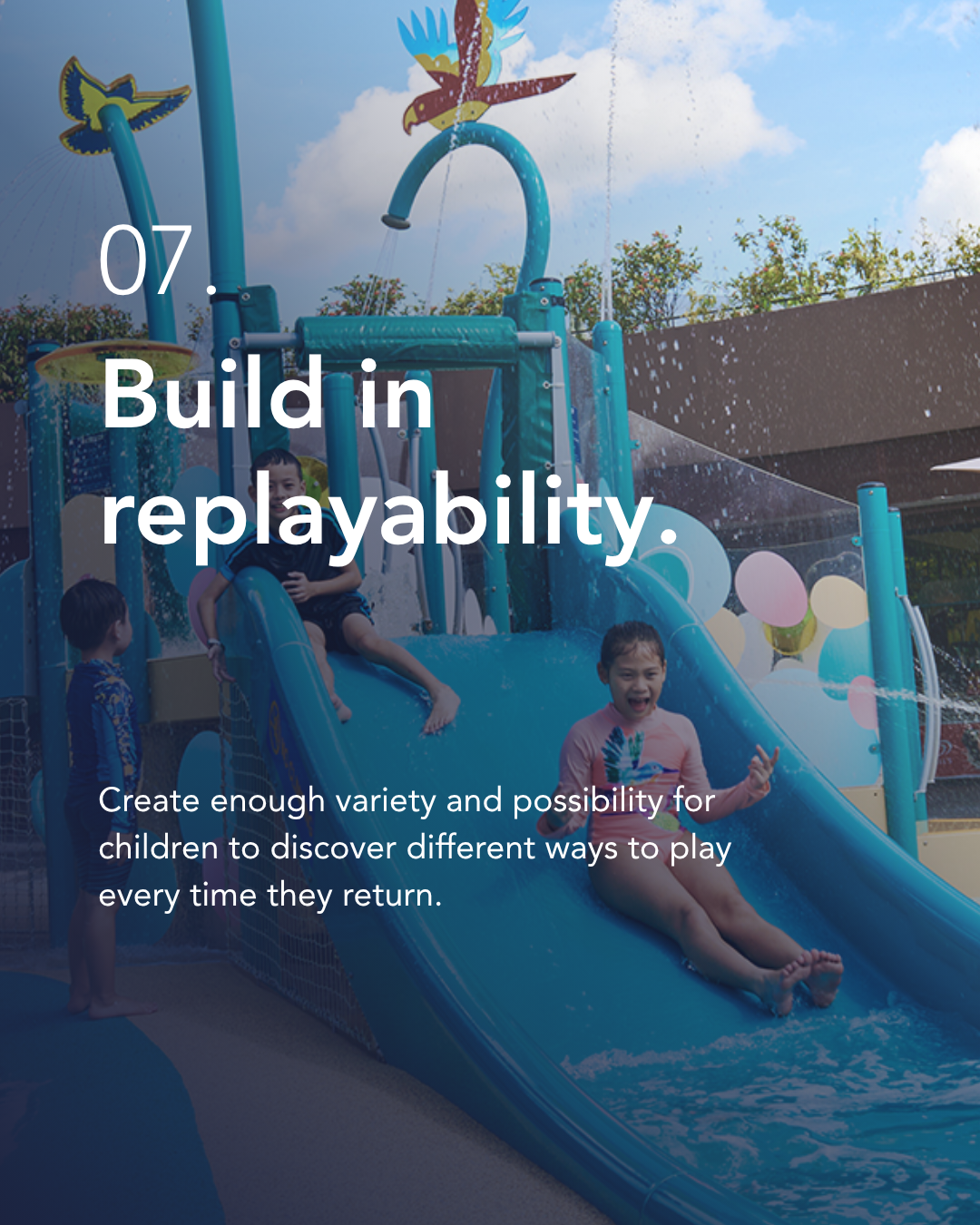
A great playground encourages a different play experience with every visit.
Replayability comes from offering different routes to take, challenges to master and possibilities to invent. Open-ended structures allow play to change as children grow in confidence, develop new abilities and return with different friends.
The goal is not simply to hold their attention for longer. It is to create enough depth and variety for children to keep discovering new ways to play each time they return.
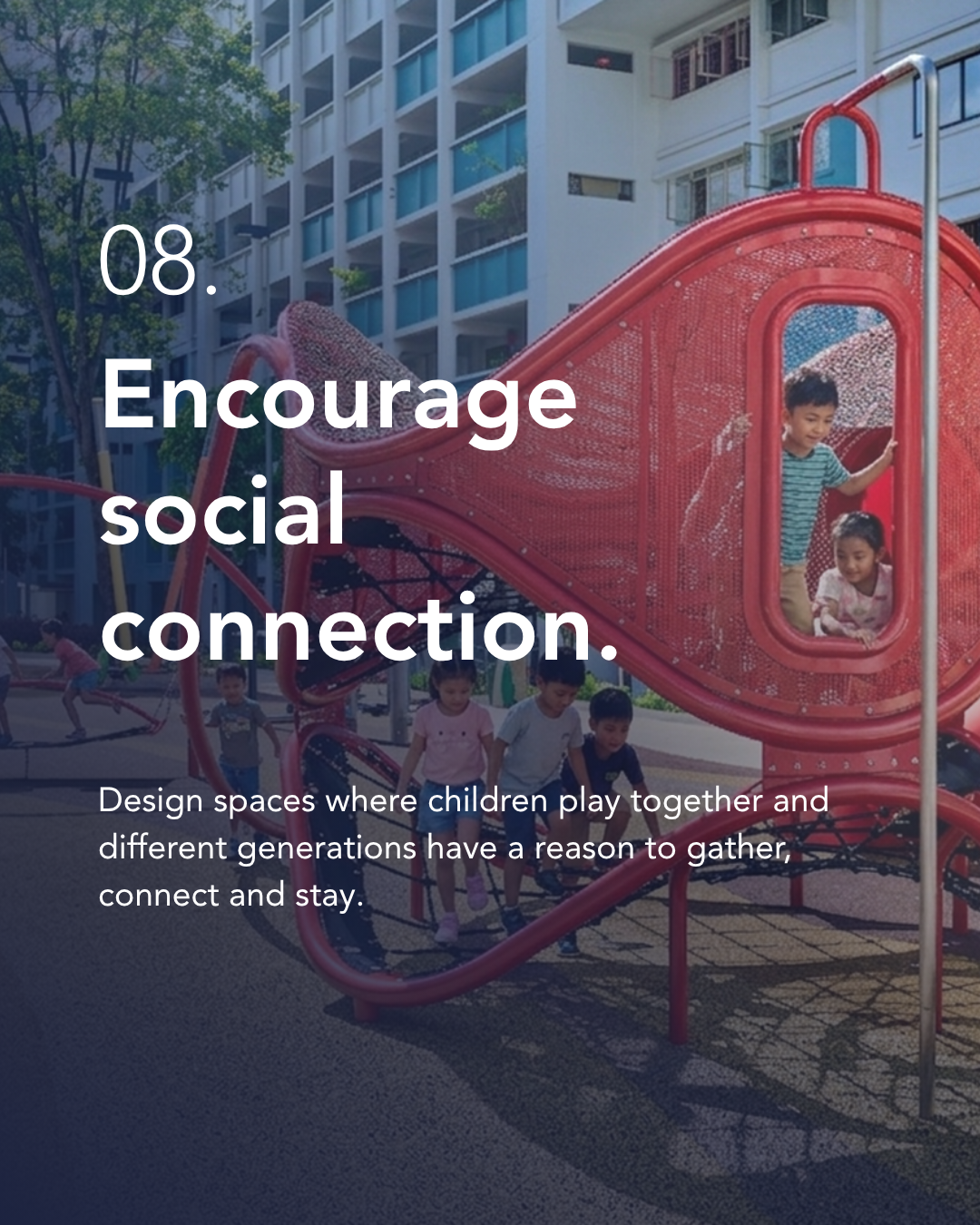
8. Encourage social connection
Playgrounds are not only for individual play. They are shared spaces where children learn to take turns, negotiate, cooperate and create games together. Their social value can extend to the wider community too.
At Play@Heights Park, we designed for different generations at once: toddler play and trampolines for the little ones, ziplines and the rolling bridge for older children, and wheelchair-accessible fitness stations so grandparents and residents of different abilities have a reason to be there too.
Designing a great playground takes imagination to see what a space could become, courage to design in risk and discipline to design out hazards. Above all, through every technical decision, we have to remember what we are really creating: meaningful play experiences where confidence grows, communities connect and childhood memories take shape.